
“You don’t need an ocean to feel like you’re drowning. You feel it, between your chest and your throat, the weight of it stretching you outside your self, like a dead fish on the shore.”
– Malak El Halabi
One of the most accurate metaphors I heard for depression came from my first therapist, Joy. She described my sad emotions like a sea with its waves crashing over me and my happiness like a surfboard. Sometimes I had no trouble staying upright on the surfboard conquering my happiness, but other times I would fall as the waves overtook me. Instead of standing to face them, I lay there as the waves tumbled over me until I felt myself drowning.
Joy taught me to “ride the waves” and grab hold of my surfboard instead of letting the ocean overtake me. Sometimes it seemed easier to let waves crash over me without fighting. The waves never stop coming – the fight is never over. It’s easier to let them win rather than pick myself up to fight against a relentless current. The thought of giving up seems the easy way out. I lie among the waves and let them wash over me, give control of my body over to their ebb and flow, the tides of emotion.
—
I’m not telling this story to gain sympathy or pity. I’m not telling this to make myself feel better or to fulfill any latent desires for infamy. I tell this story for healing, for self-love, for rejuvenating self-worth. I tell this story so others will know they can make it too. It isn’t easy – each trial we endure, each pain we suffer, each tear shed in silence. Each scream we stifle. Each smile we plaster across our face.
By the end of the day, I am exhausted from wearing this mask. Painting a happy face for others until I feel myself wilting like a flower begging for a drop of rain.
Depression is the invisible demon clinging to my back. Some days it pulls the shadows over my eyes and consumes my heart while other days I wish for death – for the demon to be vanquished. Anxiety is its counterpart, the strangling torturer, the guardian blocking success, the master standing in my way. Some days my entire body grows uneasy like walking on an edge, a tightrope. Some days I want to rip it out of my own skin just to feel normal again.
I don’t remember when I was first diagnosed with anxiety but the depression diagnosis came when I was fifteen. My first boyfriend Zach saw the worst of it – the beginning of my mental break. One day I felt fine. The next, the depression was worse than I ever imagined. I was losing my home, the one I’d grown up in where my mom and sister and I weathered the divorce; the piece of jetsam in the storm of life’s upheaval.
We escaped an abusive man, my mother’s second husband who threatened her with a knife the previous night. We ran, packed as many things as we could and fled to my dad’s house down the road. We didn’t have anywhere else to go. We ended up living with my mom’s second husband for another six months until my mom found a small apartment for the three of us to escape to. This is where we were living when Zach’s dad dropped me off one night (neither Zach or I had a license yet).
I was hysterical. I wouldn’t stop saying I wanted to die. When Zach tried to hug me, I pushed him away. I didn’t want to be touched. I certainly didn’t want anyone to try to save me.
He called my mom that night and I remember the fear in her face when she got off the phone, a mix of terror and anguish. My little sister cried, looped under my mom’s arm. Mom asked if I needed to see someone. I didn’t want to go to therapy. I didn’t want to admit I was struggling. Mom insisted, and she wouldn’t let me sleep on my own that night. I stayed in bed with her. Neither of us slept.
—
I started seeing Joy after that, who talked me through what was going on in my head. I also started seeing a psychiatrist, who asked me what medicine I thought I should be on during our first session. I didn’t want to be on any medication. I didn’t want to rely on pills for happiness. I didn’t know if I had ever really been happy – certainly not since my parents’ divorce in second grade. But I hadn’t needed medicine to get by before. What was different now?
She prescribed Zoloft.
I hated it. I didn’t like feeling dependent on a drug to feel a certain way, to feel okay about myself. And even when I took the drug, I didn’t notice much difference. Except maybe I wanted to kill myself less. Maybe.
She prescribed Citalopram.
My stomach ached whenever I took a dose, and I had to wonder if it wasn’t in my head – my body reacting to the fact that I wanted to reject it so strongly in my mind.
She prescribed Ativan.
I continually got tired of being on medication. Like clockwork, little pills slipping down my throat with a gulp of water every night or morning. I stopped cold turkey too many times to count instead of weaning myself off. I would enter an even deeper emotional spiral but I continued to resist. I still do. Often weeks go by where I “forget” about taking my medication (now Prozac) and the suicidal thoughts creep back. They envelop me like an old friend wrapping me in his arms.
So many days I just want the pain to end but see no escape. I see no end to needing pills. Being forced to take them so I don’t do something worse. I just want to feel nothing.
Would it be cutting, filling up the tub and slicing my wrists down the road not across the street? I pictured blood blooming out of me like a cloud of octopi ink, caressing my naked body in a final kiss.
No.
The truth – no matter how I yearn for release and freedom, I’m too scared.
It’s like standing on the ledge of a burning building and trying to decide what would be worse – the fall, or succumbing to the flames licking at my back, burning down the structure and threatening to consume me.
—
When I turned 25, I was visiting my fiancé Scott and his family in Denmark over the holidays. All was perfect. We were staying in his mom’s recently purchased cottage in the countryside; the closest neighbors were a group of horses. We walked along trails set at the edge of stretching cornfields and a small flowing stream. We walked for hours before returning home. I felt free.
Still, it wasn’t easy to be away from my family despite the warmth and love radiating from Scott, his mom and sisters. While I did well treading water on my surfboard most of the time I was there, I fell into the ocean on my birthday.
I didn’t rise to fight the waves. I allowed them to roll over my body and drowned in my emotions.
Then I ran.
My heart thumped time with my pounding footsteps. I sucked fresh air, sinking it deep in my lungs. The sound of my heartbeat drowned everything in my head. I continued running, racing along the stream with my feet slipping in the mud. It was too dark to see well in front of me, but I remembered the pathway, its curves and loops.
I heard Scott in the distance, shouting my name. I ran harder. He chased me all the way to the edge of a stone overpass where water rushed underneath, its current strong and demanding. Daring me to jump.
I might have, if Scott hadn’t caught me and tackled me. Thorns scratched and scraped my legs and the impact of slamming into the ground with Scott’s arms around me seemed to snap some sense into me.
I pulled my head above the waves and heaved for air. No longer drowning in misery. Clinging tight to the jetsam which traveled to me in the storm – my saving grace.
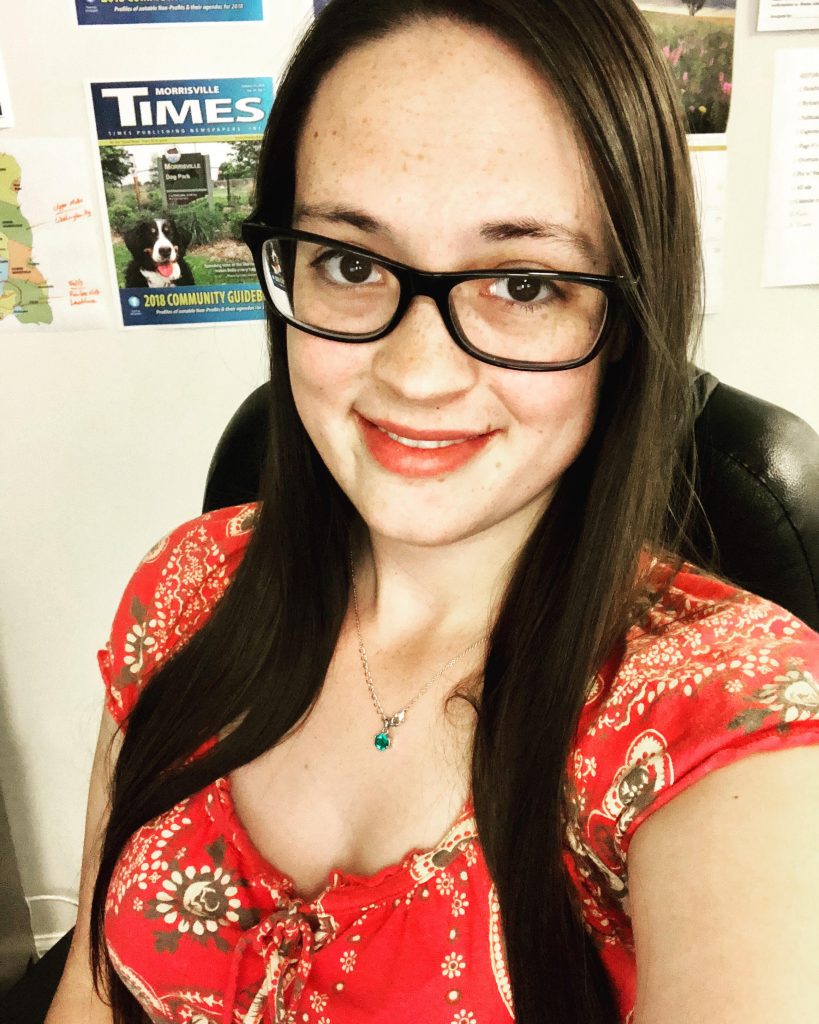 Tianna Grosch lives in the woodlands of PA and received her MFA at Arcadia University this past May. Her work has previously appeared in New Pop Lit, Who Writes Short Shorts, The Odyssey and Loco Mag, and is forthcoming in Ellipsis Zine and Echo (Paragon Journal). Follow her @tiannag92.
 E. Kristin Anderson is a poet, Starbucks connoisseur, and glitter enthusiast living in Austin, Texas. She is the editor of Come as You Are, an anthology of writing on 90s pop culture (Anomalous Press), and Hysteria: Writing the female body (Sable Books, forthcoming). Kristin is the author of eight chapbooks of poetry including A Guide for the Practical Abductee (Red Bird Chapbooks), Pray, Pray, Pray: Poems I wrote to Prince in the middle of the night (Porkbelly Press), Fire in the Sky (Grey Book Press), We’re Doing Witchcraft (Hermeneutic Chaos Press), and 17 seventeen XVII (Grey Book Press). Kristin is an editor at Red Paint Hill and was formerly a poetry editor at Found Poetry Review. Once upon a time she worked at The New Yorker. Find her online at
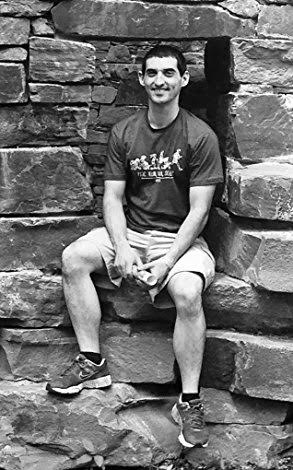 AJ Cunder graduated from Seton Hall University with a Master’s in Creative Writing. His award-winning work appears in Permafrost Magazine and is forthcoming in The Lindenwood Review along with publications appearing or forthcoming in Breath & Shadow, Harpur Palate, The Laurel Review, and Flash Fiction Magazine, among others. He currently serves as a submissions reader for Cosmic Roots & Eldritch Shores, works as a police officer, and volunteers with the Juvenile Diabetes Research Foundation as a mentor, advocate, and motivational speaker. Find him on Twitter @aj_cunder or online at