The first time I had a panic attack, I thought I was dying.
My heart pounded out of my chest. I was light-headed, as if I had run too far, too fast. When everything started looking a little strange, as if what was real was becoming surreal, that was the scariest part.
I was convinced I was about to leave my body.
That feeling became the corner stones of my attacks, and I would grab onto the heaviest piece of furniture I could find, leaning my forehead to it, willing myself to stay planted.
My panic attacks were the strong, silent type, so no one around me even knew they were happening, but inside I was a raging storm, screaming, “Help me! I don’t know how much longer I can hold myself down.”
Months earlier, I had been in a car accident, and began experiencing debilitating daily panic attacks that impacted my confidence and sense of self.
I finally decided to get help from a therapist.
—
“What’s your inner rebel telling you to have for dinner?” my therapist, Dr. D., asked.
“Are you serious?” I said.
“Yes,” Dr. D. deadpanned. And there’s no way she wasn’t, with her humorless eyes and two proud inches of gray at her roots, inching down to rusty waves.
I closed my eyes. A black-haired, vermillion-lipped, tattooed chick, my alter-ego suddenly cocked her head at me and winked.
“OK, girl,” she said breathily, exhaling clove cigarette smoke. “Eat 16 Oreos and drink a Corona. Or two. Or three. How about six?”
“What happens next?” Dr. D. prompted.
I almost quipped, “Fireworks exploded out of her ears!”
Instead, I focused my thoughts.
“Nope, you’ll measure out your protein, carbs, and vegetables mixed with one tablespoon of olive oil,” a stentorian voice suddenly piped. “You’ll drink water with fresh-squeezed lemon juice.”
“That voice’s persona is your taskmaster,” explained Dr. D. as I imagined her as yet another facet of me, with hair in a bun and severe black glasses hanging from a gold chain.
Being in Dr. D.’s office was no laughing matter, though: Even sitting there, I’d feel my insides starting to lift up and away, and I’d instinctively grip the arms of my chair.
—
I’d been in car accidents before, but never one where I had been hurt.
This time, a young driver ran a stop sign, T-boning my car on my driver’s side, as I was returning home from a playdate with my two young kids in the backseat.
I remember the moment of impact, my body jolted and hurled to the side, the windshield shattering glass all over me, and the car forcibly turned around.
When the car hit into the curb, it was totally silent. When I looked into the rearview mirror to see if my kids were OK, they just stared, wide-eyed.
Finally, my two-year-old son raised up his chocolate-covered fingers and started to cry: He had dropped his cookie on the floor into the glass and dust.
Even though I walked away feeling fine, later that night I started seeing stars out of my right eye and I couldn’t talk straight.
At the emergency room, I was diagnosed with a concussion and was assured I’d feel better in two weeks.
Wrong: It took me nine months to recover from the extreme light sensitivity, frightening daily migraines with aura, and gut-wrenching pain in my neck and occipital muscles.
The panic attacks lingered, though: I was bruised. I flinched every time I got in the car to drive.
I realized I could be hurt. I realized I could be taken from my kids.
I realized they could be taken from me.
—
Dr. D. advocated daily mindfulness techniques – grounding exercises, three-minute meditations, belly breathing, reciting mantras – that I scoffed at during our sessions.
I refused to try these New Age exercises, thinking there had to be better ways to stop my panic attacks, out-of-body experiences where I struggled to keep my spirit rooted in my gut.
Despite feeling that I knew I couldn’t kick the panic attacks on my own, I was still resistant to Dr. D.’s bag of tricks. I even felt silly imagining my negative self-talk as personas.
She explained that negative self-talk stressed me out to the max, further inflaming the panic attacks. Even further, the negative self-talks were at odds with each other: the Taskmaster (who told me what I needed to do to be successful, no exceptions) and the Rebel (she wanted me to party hard, subverting the Taskmaster at every turn).
Dr. D. wanted me to picture the Taskmaster and Rebel sitting at a table, a business meeting of sorts, with a mediator. “What would the mediator say to calm these two down?”
“She’d tell me to eat a lean hamburger patty with an over-easy egg, and broccoli,” I said. “That way, I get protein and satiating fat, but I don’t blow my diet and get drunk.”
It clicked. While the car accident triggered two to three daily panic attacks, my prior inner struggles with feeling like I had to be perfect and sacrifice fun for achievements also wreaked havoc on my quest to get balanced.
I was finally ready to try Dr. D.’s mindfulness techniques.
—
To start, she recommended downloading Insight Timer, which has more than 1.1 million users and many timed, guided meditations as short as three minutes.
One evening after a long day at the office, instead of relaxing, I was listening to the Taskmaster: “The house is a mess! Vacuum. Put away the dishes. The carpeted stairs are covered in cat hair!” My heart pounded. It got worse as the Rebel taunted, “Come on! Just go to bed. Who cares if it’s 6 p.m.?”
I grabbed my phone and selected a three-minute “peace” meditation. The soft voice laser focused me on my breaths and heartbeat. Amazingly, the meditation kicked the panic attack’s butt. What worked best for me were meditations where I scanned my body, not the ones asking me to float among stars.
Then, when I was in a bar a couple nights later on Friday with lots of noise and stimulation, the Taskmaster’s blare – “Dishes! Laundry! 90-minute workout! Draft three poems! Your editor’s letter! Don’t eat the fries!” – set off an attack with a wave of dizziness. Of course, the Rebel jumped in: “No! No! Start drinking now! Party hard.”
So I tried a grounding exercise, which is different than a guided meditation: They use our senses, what we see, hear and smell, to connect our body and mind to the moment. “You can recall and employ these techniques easily to distract yourself from anxiety,” Dr. D. said. When I searched the web, I found many grounding exercises: Notice five things you can see, five things you can hear, five things you can feel, taste or smell. Or sip a cold drink of water.
Without leaving my stool, I closed my eyes, asking myself questions: What’s your name? (Nicole) How old are you? (40) What can you hear right now? (Someone laughing, glasses clinking) What two things can you feel right now? (Wooden stool, cool glass of iced tea in my hand) What can you smell right now? (Hot wings, air conditioning pumping over my head)
When my heart slowed, I imagined myself sitting between the Taskmaster and Rebel. “Look,” I thought, “I’m out with my husband for a couple of hours. I’ll get to some of the work tomorrow, and I’m not going to party all night.”
The Taskmaster and Rebel both looked annoyed, but the tense moment deflated.
—
“I listened to each of them,” I told Dr. D. at my next appointment. “And I told them what I wanted, which fell in the middle.”
“Right,” Dr. D. said. “The Rebel keeps you creative and fun, and the Taskmaster keeps you responsible and alive. But you need to converse with both of them and then decide what you want.”
I couldn’t believe how giving my thought patterns personas helped in relieving my stress. The car accident’s suddenness had made me feel like I wasn’t in control of my life anymore.
Now, I had put myself in the driver’s seat to decide what course of action was healthiest for me while getting in tune with my inner self.
Of course, the mindfulness techniques also helped, and I use one technique daily. Amazingly, my panic attacks have stopped for the most part.
Sometimes, still, the old panic attack feelings come on staggeringly quick – sudden racing heart and dizziness – so one fast down-and-dirty technique Dr. D. suggested was belly or diaphragmatic breathing, which stimulates the vagus nerve. This technique works almost instantly for me.
Quick explanation: Part of the parasympathetic nervous system, the vagus nerve winds from the brainstem down the spine to the tongue, heart, lungs and other organs. When you stimulate by it filling your abdomen with breath, you calm your body down since you counteract your sympathetic nervous system that activates flight-or-flight responses.
“The Rebel and Taskmaster will vie for your attention,” Dr. D. said, “but you know how to put them in their places.”
“Yep,” I said. “The three of us are going to have a lot of fun.”
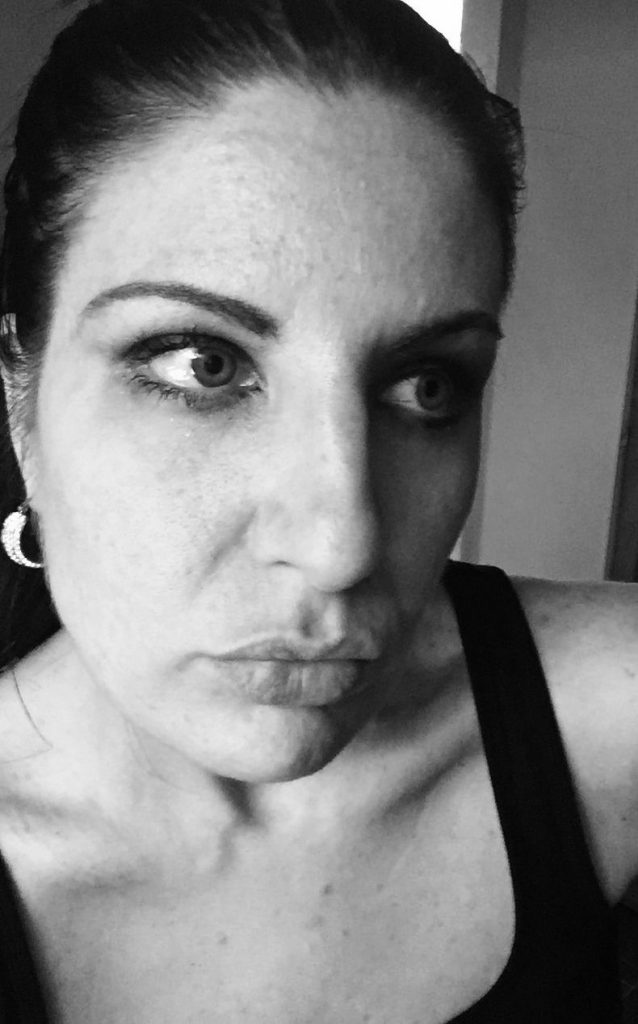 Nicole Rollender is a South New Jersey-based poet, editor and writer. Her work has appeared in Good Housekeeping, Dr. Oz The Good Life, Woman’s Day and Cosmopolitan. She’s the author of the poetry collection Louder Than Everything You Love. Recently, she was named a Rising Star in FOLIO’s Top Women in Media awards and a 2017 recipient of a New Jersey Council on the Arts poetry fellowship. Visit her online at www.strandwritingservices.com; on Facebook or Twitter.
SaveSaveSaveSave
SaveSave
SaveSave
SaveSave
SaveSave
SaveSave
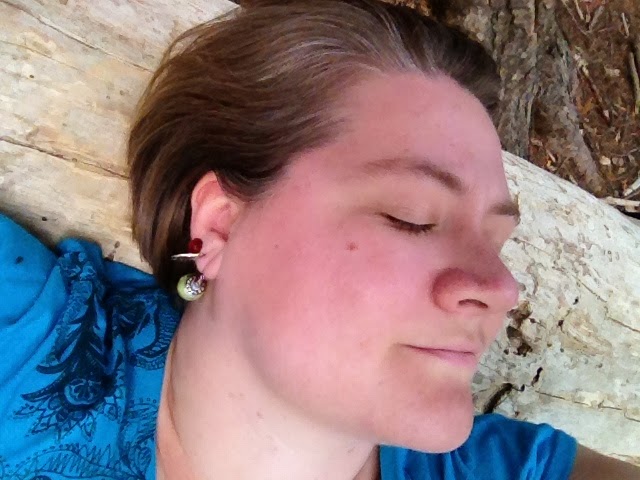 Frances Donovan’s publication credits include Borderlands, Snapdragon, Marathon Literary Review, Dirty Chai, Gender Focus, and The Writer. She curated the Poetry@Prose reading series in Arlington, Massachusetts, and has appeared as a featured reader at numerous venues. She has been living with bipolar disorder and PTSD for most of her life. Find her online at www.gardenofwords.com. Twitter: @okelle.

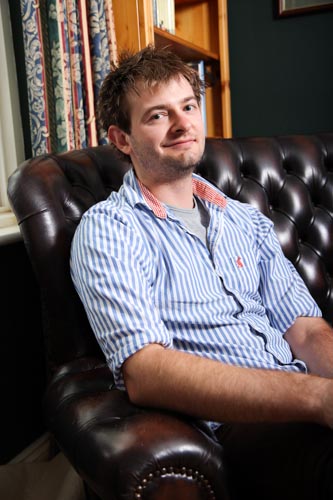 Trained as a scientist, Jack Croxall concluded a life in the lab wasn’t for him. After discovering a passion for writing he’s now an author/blogger battling chronic fatigue syndrome (CFS) in life and in prose. He tweets via @